
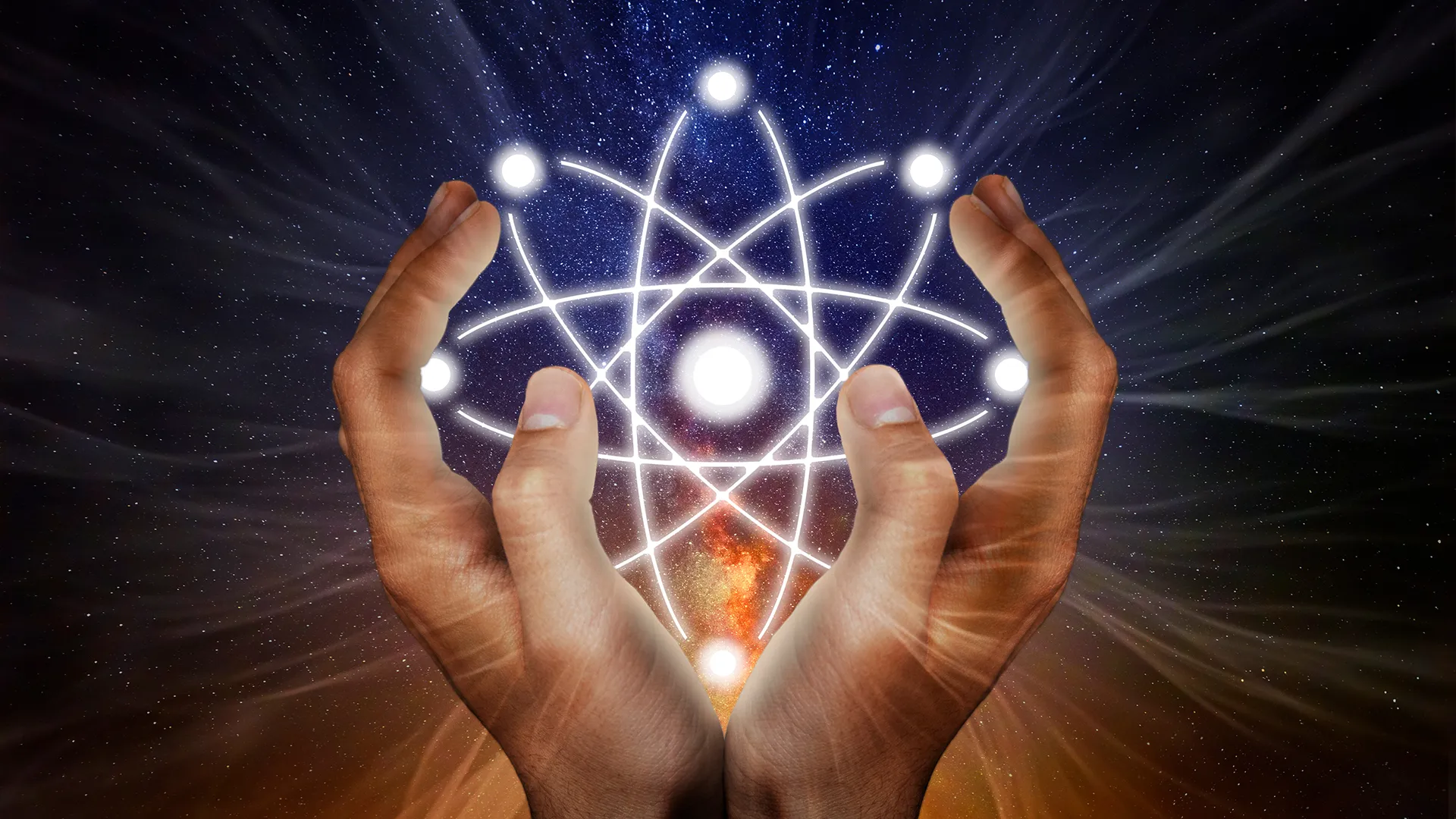
The relationship between faith and science has been a topic of debate for centuries. From the early days of the scientific revolution to today’s modern age, people have often questioned whether the two can coexist or if they are fundamentally at odds. Faith, grounded in belief and spirituality, often addresses the “why” of existence, while science seeks to understand the “how” through empirical evidence and observation. At first glance, these two approaches to understanding the world may seem incompatible, but a closer look reveals that faith and science may have more in common than we realize.
The Nature of Faith
Faith, by definition, involves belief in something without the need for empirical evidence. It often relates to the unseen or the divine. For many people, faith provides purpose, direction, and a moral framework for living. Religious beliefs offer answers to profound questions such as: Why are we here? What is the meaning of life? What happens after we die? These are questions that transcend what science can measure or test. Faith is rooted in trust, trust in God, a higher power, or in the teachings of a religious tradition.
At its core, faith provides a sense of hope and understanding that often comforts individuals, especially in times of uncertainty or difficulty. This belief system, however, is not subject to experimentation or observation in the way scientific hypotheses are. This creates a potential divide between science and faith when it comes to explaining the world and the universe.
The Role of Science
Science, on the other hand, is based on reason, observation, experimentation, and the search for evidence. It operates within the realm of the natural world, attempting to explain the mechanics of the universe. From the discovery of gravity to the structure of DNA, science has provided humanity with an ever-expanding understanding of how the world works. Through the scientific method, hypotheses are tested, experiments are conducted, and conclusions are drawn.
Science excels in answering questions about the natural world, such as how plants grow, how diseases spread, and how the universe was formed. It offers tangible, repeatable, and observable results, which makes it a powerful tool for improving life through technology, medicine, and industry. However, science is limited in its ability to answer metaphysical questions about purpose, meaning, or the divine.
The Historical Divide
The tension between faith and science has historically been most pronounced in areas where the two appear to contradict each other. One of the most famous examples is the debate over the heliocentric model of the solar system proposed by Nicolaus Copernicus and later supported by Galileo. The Catholic Church opposed this scientific theory because it contradicted the belief that the Earth was the center of the universe, a view held by Scripture at the time. This conflict came to a head in the trial of Galileo in the 17th century, where he was forced to recant his views under threat of punishment.
Similarly, the theory of evolution put forth by Charles Darwin in the 19th century clashed with the biblical account of creation. For many religious individuals, the idea that humans evolved from lower life forms seemed incompatible with the belief that God created humans in His image. This debate continues in some circles today, particularly in discussions about the teaching of evolution in schools.
These historical examples highlight moments where faith and science appeared to be in direct opposition. Yet, these instances also demonstrate how science has evolved over time to offer a deeper understanding of the world, while faith has adapted to incorporate new knowledge.
Can Faith and Science Coexist?
Despite these historical tensions, many people have found ways to reconcile their faith with scientific understanding. The key to understanding how faith and science can coexist lies in recognizing that they are often asking different kinds of questions. While science can explain how things work in the natural world, it does not address the deeper meaning of life or the nature of the divine.
For example, science can explain the process of evolution and the development of life on Earth, but it cannot answer why life exists or what purpose it serves. Faith, on the other hand, provides a framework for understanding purpose, morality, and the existence of a higher power. These are areas where science has no direct answers. Rather than being in conflict, faith and science can be seen as complementary, with science helping to explain the “how” and faith offering insight into the “why.”
Many religious individuals view scientific discoveries as a way to appreciate the wonder of God’s creation. For example, some Christian scientists see the study of the universe’s origins and the complexities of life as a means of better understanding the Creator. The famous physicist and theologian, Francis Collins, who led the Human Genome Project, has written extensively about how his Christian faith and his scientific work are deeply intertwined.
Embracing Both Perspectives
For those who wish to embrace both faith and science, it is essential to approach each with humility and respect for their respective domains. Faith should not be used to dismiss scientific discoveries, and science should not be used to deny the existence of the divine. Instead, both can be seen as complementary tools for understanding the world, one addressing the spiritual and existential questions of life, the other offering insight into the physical and natural world.
By accepting that science and faith operate within different spheres, believers and scientists alike can engage with both in a way that enriches their understanding of life and the universe. Rather than seeing faith and science as opposing forces, we can view them as two lenses through which to better comprehend the complex and awe-inspiring reality we inhabit.
If you’re interested in exploring how faith and science can work together in a more thoughtful and reflective way, It’s God’s World by Donald Sheaffer offers a compelling perspective. This book dives into the relationship between faith, science, and purpose, inviting readers to explore how the world around us aligns with God’s revealed plan. By examining creation, divine providence, and the ongoing spiritual battle between good and evil, Sheaffer encourages readers to see science not as a challenge to their faith, but as a part of God’s intricate design for the world. If you have ever wondered how science fits into God’s grand plan, It’s God’s World provides a thoughtful and engaging answer.